
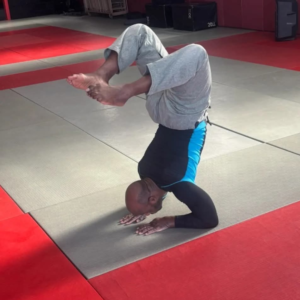
If you roll on the BJJ mats, throw kicks in taekwondo, spar in boxing, or move heavy weight in the strength room, your body takes a beating. Adding one weekly yoga session can be the recovery tool that keeps you training instead of sidelined. That is why yoga for martial artists in Huber Heights has quietly become one of the smartest additions to a serious training week.
This piece is for the crossover athlete. You already train hard. The question is how to keep your joints healthy, your breathing controlled, and your body ready for the next round.
Why fighters and lifters lose mobility over time
Combat sports and heavy lifting both build strength through repeated, specific movement patterns. Over months, those patterns can tighten hips, shoulders and the thoracic spine.
A boxer’s shoulders round forward from guarding. A jiu-jitsu player’s hips get stiff from being folded up under pressure. A powerlifter’s posterior chain stays tight from squatting and pulling.
None of that is a flaw in your training. It is simply what happens when you load the same tissues over and over without giving them a chance to lengthen and reset. Yoga fills that gap directly.
How yoga for martial artists in Huber Heights supports your primary sport
Think of yoga as accessory work for the things you actually care about. It is not replacing your rounds or your lifts. It supports them.
Mobility that shows up on the mat
Deeper hip range helps your guard retention and your kicks. Better shoulder mobility protects you in a boxing stance and under a heavy bar.
When you can access a fuller range of motion, you move more efficiently. That means less energy wasted fighting your own stiffness during a hard round.
Recovery between hard sessions
A slower, controlled yoga flow gives your nervous system a chance to downshift. After a tough sparring night or a heavy lower-body day, gentle movement often helps you feel less stiff the next morning.
Recovery work like this can help with the day-to-day soreness that comes with consistent training. It will not erase every ache, but it gives your body a structured way to reset.
Breath control you can use under pressure
Breathing is the skill fighters underrate the most. Panic breathing in a scramble or a late round drains you fast.
Yoga trains slow, deliberate breathing while your body is under mild stress in a pose. Over time, that carries over. You learn to stay calm and keep your breath steady when a training partner is on top of you or the bag work gets brutal.
Why proper form still matters in yoga
Yoga looks gentle, but it is still loaded movement. Forcing a deep stretch when your body is not ready can cause its own strain.
Proper form is critical, especially if you are newer to the poses or working around an existing issue. Move into a class with a qualified instructor rather than teaching yourself from videos, and let your coach help you scale poses to your body. If you are recovering from an injury, talk to a medical professional before adding new movement.
The real advantage: everything under one roof
Here is where training in the Dayton area gets convenient. At MPower Gym in Vandalia, you do not have to drive to a separate studio for your yoga.
MPower is a 12,500-square-foot facility that combines a full martial arts academy and a traditional strength and conditioning gym. The same membership that covers your Brazilian jiu-jitsu, taekwondo, boxing, kickboxing and strength training also gives you access to our yoga classes. For Huber Heights members making the short drive up toward Vandalia, that means your recovery work and your hard training live in the same place. Take a look at our full class lineup to see everything the membership includes.
Built by people who train both sides
MPower is co-owned by a nationally ranked powerlifter and a 7th-degree taekwondo master. That combination matters here. The people running the gym understand what it takes to move heavy weight and what it takes to compete on the mat.
That is not a coincidence of marketing. It shapes how the programs fit together, so recovery and mobility are treated as part of serious training rather than an afterthought.
A schedule that fits around your training
Consistency is the hard part for anyone with a job and a family. Some weeks are busier than others, and it is not always easy to add another session. You can check the current class schedule to find a yoga slot that lines up with the rest of your week.
MPower members get 24/7 open gym access through the gym’s app, so your strength work fits whenever you can get there. Stacking a weekly yoga class onto that flexibility makes it realistic to actually keep the habit going.
Who benefits most from adding yoga
The crossover athlete gets the most out of it. If you already split your week between striking, grappling and lifting, a single weekly yoga session is the lowest-effort way to protect all of it.
Newer members benefit too. Building mobility and breath awareness early tends to make the rest of your training feel more manageable as the intensity climbs. If you are ready to commit, you can join now and start stacking recovery work into your routine.
Bringing it together
One weekly yoga session is a small time investment against a real payoff: better range of motion, steadier breathing and a body that recovers more smoothly between hard training days. For fighters and lifters, that is a practical edge, not a luxury.
MPower Gym serves Vandalia, Dayton, Englewood, Tipp City, Huber Heights, Trotwood and Clayton from its home base in Vandalia, Ohio. If you want to see how yoga fits alongside your martial arts and strength training, grab a free day pass and come try a class for yourself.
Frequently Asked Questions
How often should a martial artist do yoga each week?
For most crossover athletes, one weekly yoga session is enough to support mobility and recovery without cutting into your primary training. If you have extra time, a second lighter session on a rest day can help too.
Will yoga make me less powerful for lifting or striking?
No. A weekly mobility-focused yoga session complements strength and combat training rather than replacing it. Better range of motion and breath control generally help you move more efficiently in your main sport.
Do I need yoga experience to start?
Not at all. Poses can be scaled to your current mobility, and working with a qualified instructor helps you learn proper form from day one. Let the coach know you train martial arts or lift so they can guide you appropriately.
Can I do yoga and martial arts at the same gym in the Dayton area?
Yes. MPower Gym in Vandalia offers yoga alongside Brazilian jiu-jitsu, taekwondo, boxing, kickboxing and strength training in one 12,500-square-foot facility, which is a short drive for Huber Heights members.
How does yoga help with recovery after hard training?
Slow, controlled yoga gives your nervous system a chance to downshift and helps you feel less stiff after tough sessions. It often helps with everyday soreness, though it works best alongside good sleep and nutrition.
Is yoga safe if I am dealing with an old injury?
It can be, but proper form is critical and some poses may need to be modified. Talk to a medical professional before adding new movement, and always tell your instructor about any existing issues.
What should I bring to my first yoga class?
Comfortable clothing you can move in and water are the basics. Ask the front desk at your location about mats and any other equipment before your first session.


