
Walking into your first grappling class is intimidating for almost everyone. You do not know what to wear, what will happen, or whether you are about to embarrass yourself in front of strangers. That fear stops a lot of adults from ever trying, which is a shame, because starting brazilian jiu jitsu for beginners in Vandalia is a lot simpler than it looks from the outside.
I coach here at MPower Gym on North Dixie Drive, and I have watched hundreds of first-timers walk through the door nervous and leave hooked. This guide covers exactly what to expect so you can show up ready instead of anxious.
Why more adults in Vandalia are trying BJJ
The reason people are drawn to jiu jitsu right now has less to do with fighting and more to do with purpose. A treadmill gives you a workout. A grappling class gives you a puzzle to solve, a new skill to build, and a room full of people learning alongside you.
That skill-based progression is what keeps beginners coming back. You are not chasing a number on a scale. Instead, you are learning something measurable every single week, and that steady sense of getting better is far more sustainable than willpower alone.
For adults in Englewood, Tipp City, Huber Heights and the wider Dayton area, that mix of a real workout and a real skill is the whole appeal. You leave tired, but you also leave a little smarter than you walked in.
Getting started with brazilian jiu jitsu for beginners in Vandalia: what to wear
You do not need to buy anything to start. For your first session, wear athletic clothes that cover your skin and can handle a lot of movement.
A fitted t-shirt or rash guard and athletic shorts without pockets, zippers or buttons work perfectly. Those hard parts can catch fingers and toes on the mat, so leave the cargo shorts at home.
A few practical notes. Trim your fingernails and toenails short, because grappling is close-contact and long nails scratch. Skip jewelry, and if you have long hair, tie it back. We train barefoot on the mat, so you only need shoes for walking to and from it.
Do I need a gi to start?
Not for your first class. Our BJJ Fundamentals program is built for people trying the sport for the first time, and you can start in normal workout clothes while you decide whether you enjoy it.
Once you commit, you will want the proper uniform. That brings up the question almost every beginner asks next.
Gi vs no-gi: what is the difference?
The gi is the traditional heavy cotton uniform, the jacket, pants and belt you picture when you think of martial arts. No-gi swaps that for a rash guard and shorts, with no jacket to grab.
That single difference changes how the sport feels. In the gi, you use the fabric of the jacket and pants for grips, control and certain chokes, so the pace is often slower and more methodical.
No-gi has no fabric to hold, so it moves faster and relies more on body control and underhooks. Neither one is better for beginners. Most people benefit from learning the gi first, because the slower pace gives you more time to think through each position.
My honest advice: start with whichever class fits your schedule, and try both over time. You can check the current class schedule to see what lines up with your week. The core principles carry over completely.
What actually happens in a beginner class
Here is the part that removes most of the fear. A first class is structured, supervised and predictable, not a free-for-all.
Most sessions open with a warm-up to get your body moving safely. After that, the coach demonstrates one or two techniques, breaking them down step by step so you can copy the movement slowly.
Then you drill with a partner, taking turns practicing the move with no resistance. This is where the real learning happens, and it is calm, cooperative and low-pressure.
Some classes end with light live practice, called rolling, but as a beginner you are never thrown into hard sparring on day one. You build up to it once the basics feel comfortable.
Safety and the golden rule of tapping
Jiu jitsu has a built-in safety valve that makes it far safer than it looks: the tap. When you are caught in a submission or simply feel uncomfortable, you tap your partner or the mat, and they release immediately.
Tapping is not losing. Every person on the mat taps, including advanced students and coaches, and treating it as normal is exactly what keeps everyone healthy.
Proper technique and control matter here, which is why beginner movements should always be learned under coach supervision rather than from a video. Good partners protect each other, and a good room polices that culture constantly.
As with starting any new physical activity, it is smart to check with your doctor first, especially if you have existing injuries or health concerns. This article is educational and is not a substitute for medical advice.
How a hybrid academy feels different from a pure fight gym
Not every grappling room feels the same, and this is where MPower stands apart. We are a hybrid academy, meaning our 12,500-square-foot space houses both a full strength and conditioning gym and a martial arts program under one roof.
That matters more than it sounds. A pure fight gym is often built around competition and hard sparring, which can feel harsh to a nervous beginner. Our mat culture is family-oriented instead, with youth and adult programs and members of all ages training in the same building.
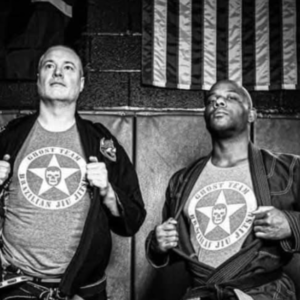
Our BJJ is run through Ghost Team, a Carlson Gracie Team affiliate, so the instruction carries a real lineage. Still, the everyday tone on the mat is welcoming rather than intimidating, which is exactly what a first-timer needs.
Because we are a full gym too, your membership is not locked into one thing. You can drill jiu jitsu, lift on your own with 24/7 app-based access, and round out your training however you like. Take a look at our full class lineup to see everything included under one roof.
Ready to step on the mat?
Starting brazilian jiu jitsu for beginners in Vandalia comes down to one small step: showing up. Wear comfortable athletic clothes, keep your nails short, remember that tapping is normal, and let the coach guide the rest.
MPower Gym serves Vandalia, Dayton, Englewood, Tipp City, Huber Heights, Trotwood and Clayton from our home on North Dixie Drive. If you have been curious about jiu jitsu, grab a free day pass and come watch a beginner session for yourself. When you are ready to commit, you can join now and lock in your spot. The hardest part really is just walking through the door.
Frequently Asked Questions
Do I need any experience to start BJJ as an adult?
No. Our BJJ Fundamentals class is built for complete beginners, and the coach breaks every technique down step by step. You learn the basics slowly with cooperative partners before any live practice.
What should I wear to my first jiu jitsu class in Vandalia?
Wear a fitted t-shirt or rash guard and athletic shorts without pockets, zippers or buttons. Trim your nails, skip jewelry, tie back long hair, and know that you train barefoot on the mat.
Do I have to buy a gi before I start?
Not for your first class. You can start in normal athletic clothes while you decide whether you enjoy the sport, then invest in a proper uniform once you commit.
Is tapping in BJJ a sign of failure?
Not at all. Tapping is the built-in safety signal that keeps everyone healthy, and every student taps, including coaches. It simply tells your partner to release immediately.
What is the difference between gi and no-gi BJJ?
The gi is the traditional cotton uniform you can grip for control and chokes, which slows the pace. No-gi uses a rash guard and shorts with no fabric to grab, so it moves faster and leans on body control.
How is MPower different from a regular fight gym?
MPower is a hybrid academy combining a full strength and conditioning gym with martial arts under one roof. The mat culture is family-oriented and welcoming, and our BJJ runs through Ghost Team, a Carlson Gracie Team affiliate.
Should I check with a doctor before starting BJJ?
Yes, it is smart to talk with your doctor before beginning any new physical activity, especially if you have existing injuries or health concerns. This guidance is educational and not a replacement for medical advice.


